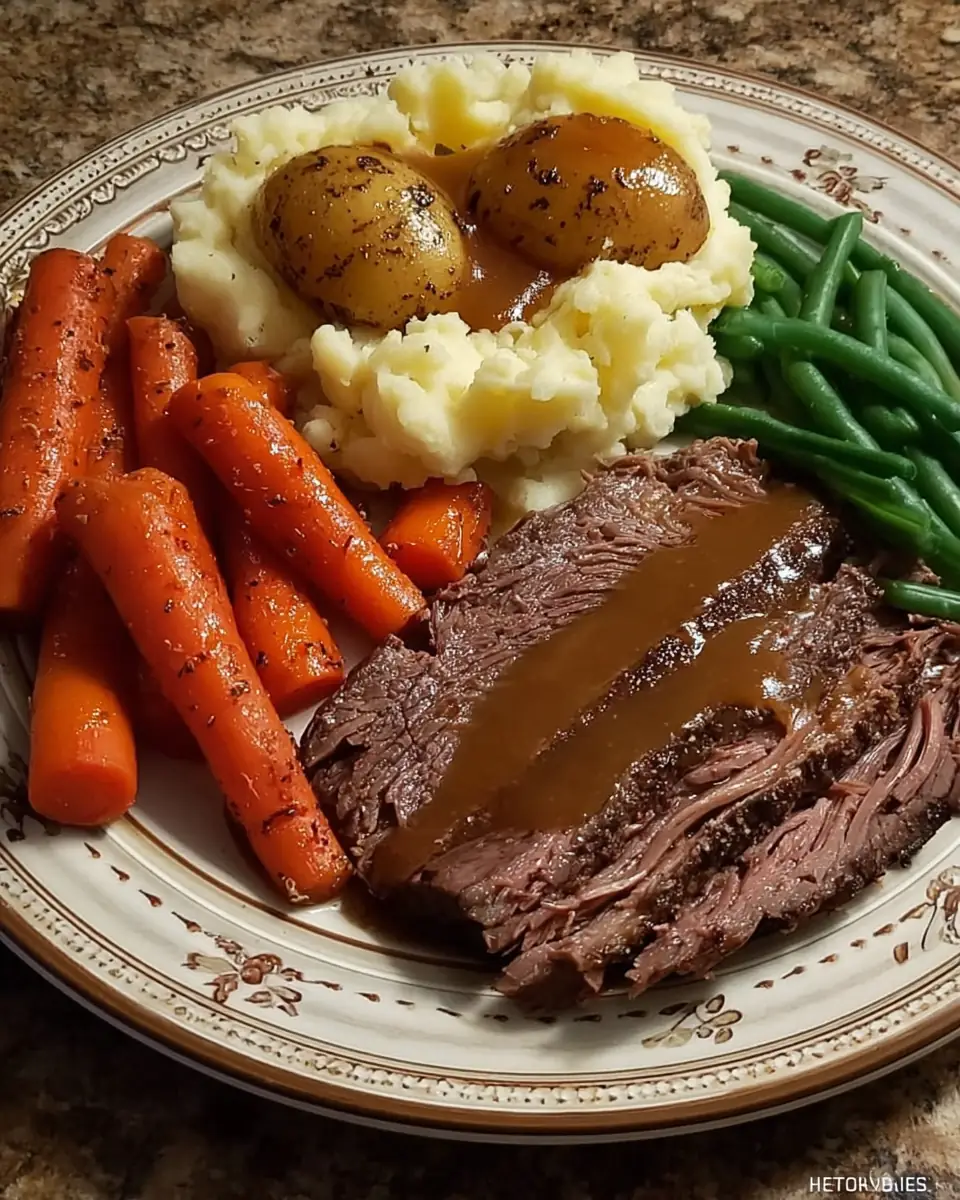
Classic Pot Roast Plate: A Hearty Comfort Food Delight
When the weather turns chilly and you find yourself craving a meal that’s both comforting and satisfying, look no further than the Classic Pot Roast Plate. This timeless dish has been a staple in family kitchens for generations, offering a perfect balance of tender meat, flavorful vegetables, and creamy mashed potatoes. Whether you’re preparing a Sunday dinner or a special occasion meal, this pot roast is sure to impress.
Why You’ll Love This Recipe
The Classic Pot Roast Plate is more than just a meal; it’s an experience. The slow-cooked chuck roast becomes melt-in-your-mouth tender, while the aromatic blend of onions, garlic, and thyme infuses the meat with deep, rich flavors. Carrots and green beans add a touch of sweetness and vibrant color, while the creamy mashed potatoes provide the perfect base to soak up the luscious gravy. This dish is a true celebration of hearty, home-cooked goodness. Its simplicity and depth make it a comforting choice for both novice cooks and culinary enthusiasts.
A Journey Through Culinary Tradition
Before delving into the detailed recipe, it’s worthwhile to understand the rich history and cultural significance of pot roast. Pot roast is a dish deeply rooted in tradition, often associated with family gatherings and homely comforts. Originating from European cuisine, it found its way to America with immigrants and quickly became a staple in American home cooking. The recipe’s adaptability and reliance on affordable, accessible ingredients made it an ideal choice for home cooks across the country. The beauty of pot roast lies in its versatility; it can be adapted to include regional flavors and seasonal ingredients, making it a dynamic dish that evolves with time and taste.
The Perfect Cut: Chuck Roast
The chuck roast, often referred to as the “shoulder cut,” is the star of this dish. Known for its rich marbling, the chuck roast becomes incredibly tender during the slow-cooking process. The connective tissues in this cut break down over time, resulting in a juicy, flavorful meat that practically falls apart with a fork. This transformation is a testament to the beauty of slow cooking, turning a humble cut into a culinary masterpiece. The marbling in the meat not only contributes to its tenderness but also infuses the dish with a rich flavor profile that speaks to the essence of comfort food.
Ingredients Breakdown
- Chuck Roast: The star of the dish, this cut is ideal for slow cooking, becoming incredibly tender as it simmers.
- Vegetables: Onions, carrots, and green beans complement the meat, each adding their own texture and flavor.
- Beef Broth & Worcestershire Sauce: These liquids create a savory base for the roast, enhancing its depth of flavor.
- Herbs & Spices: Salt, pepper, garlic, and thyme (if desired) are simple yet essential for seasoning.
- Mashed Potatoes: Creamy and buttery, they are the perfect accompaniment to the savory meat and vegetables.
- Gravy: Thickened with a cornstarch slurry, the gravy ties all the components together in harmony.
Choosing the Right Vegetables
While carrots and green beans are classic choices, feel free to experiment with other vegetables. Potatoes, celery, and peas can add variety and enhance the nutritional profile of the dish. Each vegetable brings its own unique flavor and texture, allowing you to customize the pot roast to your liking. Seasonal vegetables can also be incorporated, offering a nod to the changing times of the year and adding freshness to the dish. For instance, parsnips or turnips can provide a wintery touch, while bell peppers might offer a summer twist.
The Role of Aromatics
Aromatics such as onions and garlic are essential to creating depth in the pot roast. As they cook, they release their natural oils and sugars, which caramelize and meld with the meat’s juices, resulting in a complex and inviting aroma that fills your kitchen. These ingredients are the unsung heroes of the dish, providing a foundation of flavors that enhance the meat and vegetables. The inclusion of thyme, or even a bay leaf, elevates the dish further, adding layers of flavor that make each bite a sensory delight.
Step-by-Step Cooking Instructions

Preparation
Season and Sear: Begin by patting the chuck roast dry with paper towels. Generously season with salt and black pepper. Heat oil in a Dutch oven over medium-high heat and sear the roast on all sides until deeply browned, about 3-4 minutes per side. This step locks in flavor and creates a beautiful crust. Once seared, remove and set aside. This initial step is crucial for developing the rich, umami flavors that define the pot roast.
Aromatics: In the same pot, add sliced onion and minced garlic (if using). Cook for 3-5 minutes until softened, allowing the flavors to develop. Pour in beef broth and Worcestershire sauce, scraping up any browned bits from the bottom—these are flavor gold. This process deglazes the pot, incorporating the fond into the sauce for a taste that is deep and savory.
Add Flavor: Stir in dried thyme if desired, then return the roast to the pot. This blend will infuse the roast during its slow cooking journey. Adding the roast back to the pot allows it to soak up the flavors from the liquid and aromatics, ensuring that every bite is infused with the depth of the broth.
Cooking
Slow Cook: Cover and transfer the pot to a preheated 300°F oven. Cook for 3-4 hours until the roast is fork-tender and easily shreddable. Alternatively, use a slow cooker on low for 8 hours or a pressure cooker for 60-70 minutes with natural release. The method you choose can depend on your schedule; each offers a slightly different texture and flavor, but all are delicious.
Vegetables: Add carrots during the last 60-90 minutes of cooking to ensure they become tender without overcooking. Add green beans during the final 15-20 minutes, or cook them separately to maintain their bright color and texture. This staggered approach to cooking the vegetables ensures they retain their distinct flavors and don’t become mushy.
Mashed Potatoes
- Boil & Mash: Meanwhile, boil cubed potatoes in salted water for 15-20 minutes until fork-tender. Drain and mash with butter and milk or cream. Season with salt and pepper to taste for a creamy side dish. The key to perfect mashed potatoes is ensuring they are smooth and well-seasoned, complementing the rich flavors of the roast and gravy.
Gravy
- Thicken: If a thicker gravy is desired, whisk together cornstarch and water to create a slurry. Stir it into the simmering cooking liquid and cook for 1-2 minutes until thickened to your liking. The consistency of the gravy can be adjusted based on personal preference, adding just enough thickness to cling to the meat and vegetables without overwhelming them.
Serving
- Assemble the Plate: Slice or shred the pot roast and serve over a generous helping of mashed potatoes. Arrange carrots and green beans alongside, and generously spoon gravy over the top for a picture-perfect plate. This presentation not only appeals to the eyes but also invites you to savor each component of the dish in harmony.
Nutritional Information
- Calories: 650 kcal
- Protein: 45 g
- Serving Size: 1 serving
Understanding the nutritional content of your meals can help make informed dietary choices. The Classic Pot Roast Plate is a balanced meal, providing a good source of protein, carbohydrates, and essential vitamins and minerals from the vegetables. For those monitoring their caloric intake, consider adjusting portion sizes or ingredients. The dish offers a wholesome balance of macronutrients, making it not only comforting but also nourishing.
Cooking Time
- Prep Time: 15 minutes
- Cook Time: 3 hours 30 minutes
- Total Time: 3 hours 45 minutes
The cooking time is a small investment for the reward of a dish that offers both comfort and satisfaction. The long cooking process ensures that each component is perfectly tender and flavorful. While it may seem lengthy, much of this time is hands-off, allowing you to relax or attend to other tasks while the roast slowly transforms into a tender feast.
Tips for Success
- Searing the Meat: Don’t skip the searing step; it adds a depth of flavor that’s key to a delicious pot roast.
- Flavor Variations: Feel free to add other herbs like rosemary or bay leaves for a unique twist.
- Gravy Consistency: Adjust the thickness of the gravy by controlling the amount of cornstarch slurry added.
By keeping these tips in mind, you can tailor the recipe to your tastes and ensure it turns out perfectly every time. Experimenting with different herbs and spices can lead to delightful new variations on this classic dish.
Pairing Suggestions
Consider pairing the Classic Pot Roast Plate with a full-bodied red wine, such as a Cabernet Sauvignon or Merlot, which complements the rich flavors of the beef. For a non-alcoholic option, a robust iced tea or a sparkling water with a hint of lime can refresh the palate. The drink you choose can enhance the meal’s flavors and add an extra layer of enjoyment to your dining experience.
Storing and Reheating
Leftovers can be stored in an airtight container in the refrigerator for up to three days. To reheat, gently warm the pot roast and vegetables in a covered dish in the oven or microwave. If the gravy thickens too much in the fridge, add a splash of beef broth to loosen it. These leftovers can be just as delicious as the original meal, offering a quick and satisfying option for busy days.
Adapting for Dietary Needs
For those with dietary restrictions, this recipe can be adapted. To make it gluten-free, ensure that your Worcestershire sauce and beef broth are certified gluten-free. For a dairy-free version, substitute the butter and milk in the mashed potatoes with non-dairy alternatives like olive oil and almond milk. This adaptability makes the Classic Pot Roast Plate an inclusive dish that everyone can enjoy, regardless of dietary needs.
In Conclusion
The Classic Pot Roast Plate is a versatile and forgiving recipe perfect for any home cook. Its rich flavors and comforting ingredients make it a beloved choice for gatherings and family meals alike. Whether you’re a seasoned cook or a kitchen novice, this classic dish is sure to become a favorite in your culinary repertoire. Enjoy this timeless classic that warms both the heart and soul. The pot roast is more than just a meal; it’s a cherished memory in the making, a dish that brings people together and celebrates the simple joys of home cooking.


Classic Pot Roast Plate
Enjoy a hearty, comforting meal with this classic pot roast recipe, perfect for family gatherings or a cozy night in.
- Dutch Oven
Pot Roast
- 3-4 lb chuck roast
- 1 tsp salt (to taste)
- 1 tsp black pepper (to taste)
- 2 tbsp oil (for searing)
- 1 onion (sliced)
- 3-4 cups beef broth
- 2 tbsp Worcestershire sauce (optional)
- 2-3 cloves garlic (minced, optional)
- 1 tsp dried thyme (optional)
- 1 bag baby carrots (or 4-5 carrots, cut into chunks)
- 12-16 oz green beans (fresh, frozen, or canned)
- 2 lb potatoes (peeled and cubed)
- 3 tbsp butter
- 1/3-1/2 cup milk or cream
- 2 tbsp cornstarch
- 2 tbsp water (for slurry)
- Pat the chuck roast dry with paper towels and season generously with salt and black pepper. Heat oil in a Dutch oven over medium-high heat and sear the roast for 3-4 minutes per side until deeply browned. Remove and set aside.
- Add sliced onion (and garlic if using) to the same pot and cook for 3-5 minutes until softened. Pour in beef broth and Worcestershire sauce, scraping up any browned bits from the bottom of the pot. Stir in dried thyme if using.
- Return the roast to the pot. Cover and cook in a 300°F oven for 3-4 hours, until fork-tender and easily shreddable. Alternatively, cook in a slow cooker on low for 8 hours, or pressure cook for 60-70 minutes with natural release.
- Add carrots during the last 60-90 minutes of cooking so they become tender without overcooking. Add green beans during the final 15-20 minutes, or heat them separately to maintain their bright color and texture.
- Meanwhile, boil the cubed potatoes in salted water for 15-20 minutes until fork-tender. Drain and mash with butter and milk or cream. Season with salt and pepper to taste.
- If a thicker gravy is desired, whisk together cornstarch and water to create a slurry. Stir it into the simmering cooking liquid and cook for 1-2 minutes until thickened.
- Slice or shred the pot roast and serve over mashed potatoes with carrots, green beans, and plenty of gravy spooned on top.
For an extra touch of flavor, try adding a splash of red wine to the broth. You can also swap potatoes for sweet potatoes for a different twist.