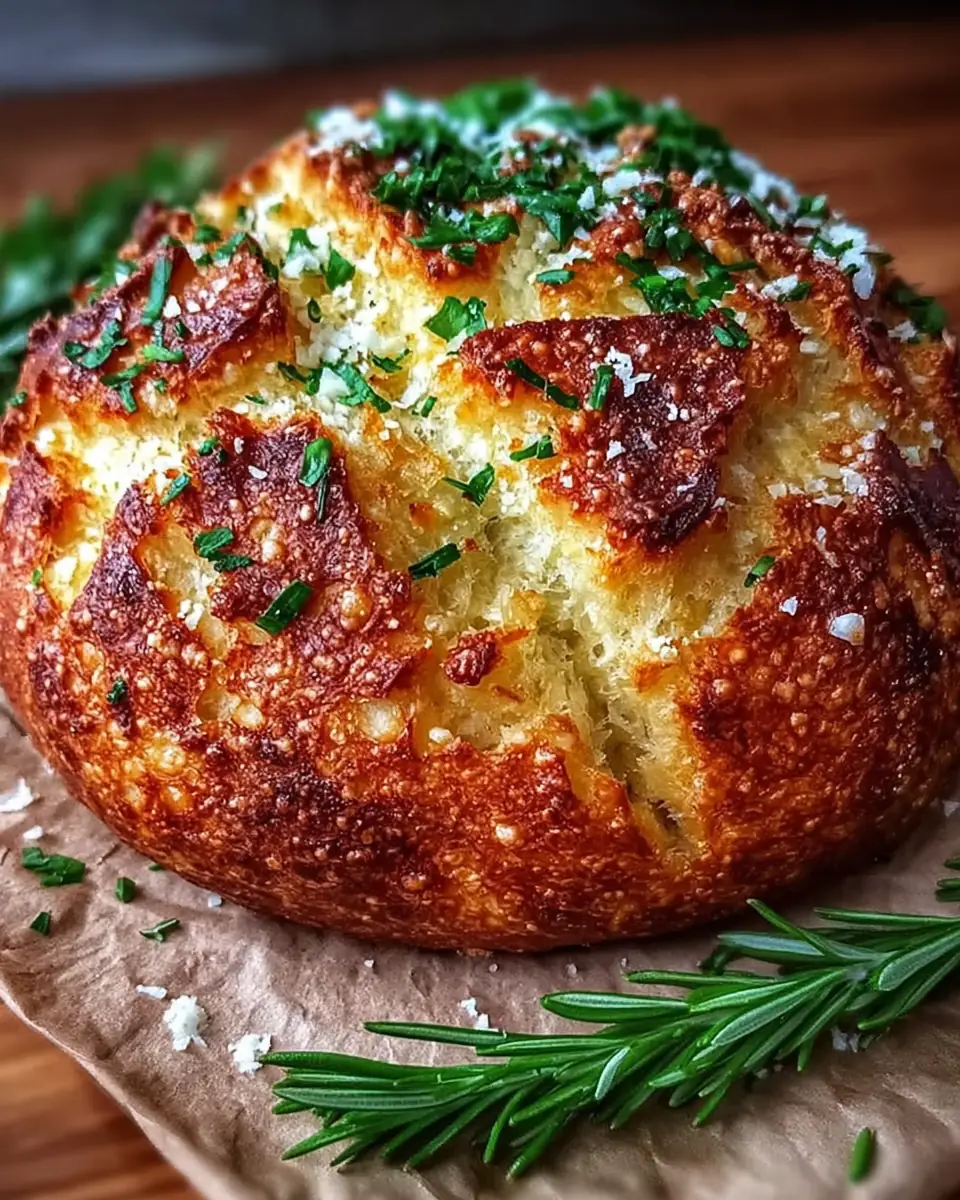
Imagine the aroma of freshly baked bread wafting through your home—a combination of warm, yeasty dough, sharp parmesan, and fragrant garlic. Our Perfect Parmesan Garlic Bread offers just that experience, with a rustic texture and flavor that feels like it came straight from an artisan bakery. This recipe is simple to follow and doesn’t require any fancy equipment, making it perfect for both novice and experienced bakers. Let’s dive into how you can create this delightful loaf at home.
Ingredients

- 3 1/4 cups (390g) all-purpose flour: The foundation of our bread, providing structure and a chewy texture.
- 2 teaspoons (10g) salt: Enhances the flavor profile of the bread.
- 1 teaspoon (5g) granulated sugar: Aids in yeast activation, giving the loaf a slight sweetness.
- 2 teaspoons (7g) active dry yeast: The leavening agent that creates the bread’s airy texture.
- 1 1/2 cups (360ml) warm water (around 110°F/43°C): Activates the yeast and binds the ingredients.
- 2 tablespoons (30ml) olive oil: Adds moisture and imparts a subtle richness.
- 1 cup (100g) freshly grated parmesan cheese: Infuses the bread with a savory, umami flavor.
- 2–3 cloves of minced garlic: Provides a robust and aromatic kick.
- 1 tablespoon (15g) chopped fresh rosemary or parsley (optional): Adds a touch of herbal freshness.
Instructions
-
Mix the Dry Ingredients: In a large mixing bowl, combine the flour, salt, and sugar. These dry ingredients form the base of your dough. The correct proportion of these ingredients ensures a well-balanced flavor and texture in the final bread.
-
Activate the Yeast: In a small bowl, dissolve the yeast in warm water. Ensure the water is around 110°F (43°C) for optimal yeast activation. Let it sit for about 5 minutes until it becomes foamy, indicating that the yeast is alive and kicking. This is a crucial step because active yeast ensures that your bread will rise correctly.
-
Combine Wet and Dry Ingredients: Pour the yeast mixture into the bowl of dry ingredients. Add olive oil and mix with a wooden spoon until you achieve a sticky dough. This stickiness is essential for the bread’s rustic texture. The olive oil not only adds richness but also aids in the development of a tender crumb.
-
Incorporate Flavor: Gently fold in the grated parmesan and minced garlic. If using, add the chopped rosemary or parsley for an extra layer of flavor. The cheese and garlic should be evenly distributed throughout the dough for a consistent flavor profile in each bite.
-
First Rise: Cover the bowl with a kitchen towel or plastic wrap. Let the dough rise in a warm place for 12–18 hours or overnight. This extended rise time is crucial for developing flavor and a light, airy crumb. The long fermentation allows the yeast to slowly break down the sugars in the flour, enhancing the bread’s flavor complexity.
-
Shape the Dough: After the dough has doubled in size and is bubbly, transfer it to a floured surface. Shape it into a round loaf carefully to preserve its airy texture. Handling the dough gently is important to maintain the gas bubbles formed during fermentation, which contribute to the bread’s lightness.
-
Preheat the Oven: Let the shaped dough rest on parchment paper for 30 minutes. Meanwhile, preheat your oven to 450°F (230°C). If using a Dutch oven, place it inside to heat up. This preheating step is important to create a hot environment that encourages the bread to rise rapidly when it hits the oven.
-
Score and Bake: Score the top of the dough with a sharp knife to allow expansion during baking. Place the dough on its parchment paper into the preheated Dutch oven. Cover with the lid and bake for 30 minutes. Scoring the bread allows it to expand properly, preventing it from tearing and giving it a professional appearance.
-
Final Browning: Remove the lid and bake for an additional 15 minutes. The top should be golden brown, and the bread should sound hollow when tapped—a sign that it’s perfectly baked. The final browning step adds a delicious crusty texture that contrasts beautifully with the soft interior.
-
Cool and Serve: Let the bread cool on a wire rack for at least 30 minutes before slicing. This resting period allows the bread’s texture to set, making it easier to slice and enhancing the overall eating experience. Cutting the bread too early can lead to a gummy texture as the steam inside hasn’t fully dissipated.
Tips for Success
- Temperature Matters: Ensure your water is warm, but not hot, to properly activate the yeast. Using water that’s too hot can kill the yeast, while water that’s too cold will prevent it from activating.
- Don’t Rush the Rise: The long fermentation time is key to developing flavor and texture. Patience is essential; the slow rise allows for complex flavors to develop and a better texture.
- Scoring Technique: Use a sharp knife or a bread lame to make clean cuts on the dough’s surface. Proper scoring allows for controlled expansion, preventing the loaf from bursting in an uneven manner.
- Cooling Time: Allowing the bread to cool fully before slicing ensures the crumb sets, making for a cleaner cut and better texture. Patience during this step pays off with a loaf that’s easier to handle and slice.
Serving Suggestions
This Parmesan Garlic Bread is versatile and pairs beautifully with a variety of dishes. Serve it alongside a hearty soup, as a base for bruschetta, or simply enjoy it with a slather of butter. The bread’s robust flavors make it a standout on any table, perfect for casual dinners or special occasions.
For a delightful twist, consider serving it with a dipping sauce made from olive oil, balsamic vinegar, and a pinch of salt. Alternatively, you can transform leftovers into croutons for salads or soups by cubing the bread and baking it until crispy.
Health Benefits and Nutritional Insights
While indulgent, this Parmesan Garlic Bread offers some nutritional benefits. Parmesan cheese is high in calcium and protein, making it a nutritious choice. Additionally, garlic has been praised for its health benefits, including its potential to support heart health and boost the immune system. When enjoyed in moderation, this bread can be part of a balanced diet.
The Art and Science of Bread-Making
Bread-making is both an art and a science. The ingredients you choose and how you handle them can significantly impact the final product. The method of slow fermentation used in this recipe is a hallmark of artisan bread-making, allowing for a depth of flavor that quick-rise methods simply cannot achieve. The interplay of ingredients like yeast, flour, and water, coupled with time and temperature, results in a loaf that is not only delicious but also a testament to the transformative power of simple ingredients.
The science behind bread-making involves the biological processes of yeast fermentation, where yeast consumes sugars and releases carbon dioxide and alcohol. This process not only leavens the bread but also develops complex flavors characteristic of well-made artisan bread. Understanding these processes can elevate your bread-making skills and help you troubleshoot any issues that may arise.
Exploring Variations
Once you’ve mastered this Parmesan Garlic Bread, consider experimenting with variations to suit your taste. You can try adding sun-dried tomatoes or olives for a Mediterranean twist. For a spicier version, incorporate some crushed red pepper flakes or a touch of chili powder. The possibilities are endless, and customizing your bread can make each loaf a unique experience.
Conclusion
With this recipe, you’ll be able to bring the art of artisan bread-making into your kitchen, impressing friends and family with your culinary skills. Enjoy the process and, most importantly, the delicious results! Whether you’re a seasoned baker or a beginner, this Parmesan Garlic Bread will become a favorite in your home, a reminder of the joys of baking and the pleasures of sharing homemade food with loved ones. Remember, the key to great bread lies in patience and attention to detail, and with practice, you’ll find yourself becoming more confident and creative in your baking endeavors. Happy baking!


Perfect Parmesan Garlic Bread Recipe Easy Artisan Style

This artisan-style Parmesan garlic bread is perfect for any occasion. Easy to make and delicious, it’s sure to be a hit!
- Dutch Oven
Bread Ingredients
- 390 g all-purpose flour
- 10 g salt
- 5 g granulated sugar
- 7 g active dry yeast
- 360 ml warm water (around 110°F/43°C)
- 30 ml olive oil
- 100 g freshly grated parmesan cheese
- 3 cloves minced garlic
- 15 g chopped fresh rosemary or parsley (optional)
- In a large mixing bowl, combine all-purpose flour, salt, and granulated sugar.
- In a small bowl, dissolve active dry yeast in warm water. Let it sit for about 5 minutes until it gets foamy.
- Pour the yeast mixture into the dry ingredients. Add olive oil and mix everything together with a wooden spoon until combined.
- Fold in parmesan cheese and minced garlic. If desired, add chopped fresh rosemary or parsley.
- Cover the bowl with a clean kitchen towel or plastic wrap. Let the dough rise in a warm place for 12–18 hours or overnight.
- Once risen, transfer the dough to a floured surface. Gently shape it into a round loaf.
- Place the shaped dough onto a piece of parchment paper and let it rest for 30 minutes while preheating your oven to 450°F (230°C).
- Score the top of your dough with a sharp knife to allow it to expand while baking.
- Carefully place the parchment paper with the dough into the hot Dutch oven. Cover with the lid and bake for 30 minutes.
- Remove the lid and bake for an additional 15 minutes, or until the top is golden brown and the bread sounds hollow when tapped.
- Let the bread cool on a wire rack for at least 30 minutes before slicing.
This bread pairs well with pasta dishes or a simple salad. For a twist, try adding sun-dried tomatoes or olives.