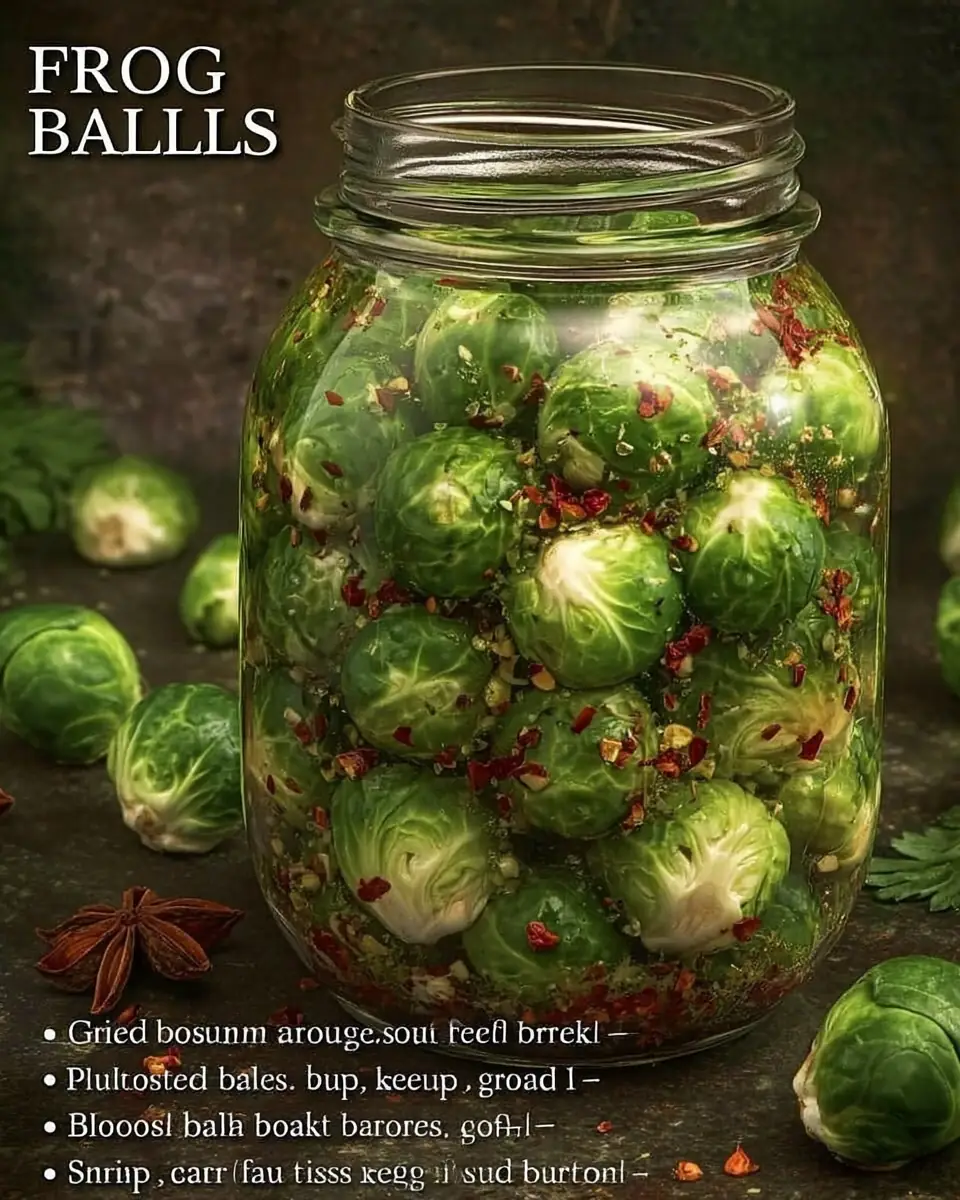
Frog Balls: A Tangy Twist on Pickled Brussels Sprouts
If you’re a fan of pickled vegetables, then “Frog Balls” might just become your new favorite snack. Despite their whimsical name, these pickled Brussels sprouts deliver a bold taste that’s both tangy and spicy, perfect for snacking, garnishing, or adding a zing to your favorite dishes. This recipe is simple to follow and packs a punch of flavor that can elevate any meal or appetizer spread.
The Backstory of Frog Balls
The quirky name “Frog Balls” might make you giggle, but there’s a culinary reason behind it. The vibrant green of Brussels sprouts, combined with their petite, rounded shape, is reminiscent of frog eggs, giving this pickled treat its playful moniker. While the name may spark curiosity, it’s the taste that will keep you coming back for more. This recipe transforms ordinary Brussels sprouts into savory, crispy delights that can be enjoyed on their own or as part of a broader culinary creation.
Brussels sprouts have long been a staple in European cuisine, particularly in Belgium, where they originated. Traditionally served roasted or steamed, these miniature cabbages have recently gained popularity as a versatile vegetable that can be transformed through various cooking methods, including pickling. Pickling not only preserves Brussels sprouts but also infuses them with complex flavors, turning them into a tangy snack that can be enjoyed throughout the year.
The Art and Science of Pickling
Before we dive into the recipe, let’s explore the art and science of pickling. Pickling is an age-old method of food preservation that involves soaking food in a solution of vinegar (or brine) and spices. This process not only extends the shelf life of the food but also enhances its flavor. The acidity of the vinegar acts as a preservative, inhibiting the growth of bacteria and other microorganisms that cause spoilage.
The choice of spices and other flavorings in the brine can significantly impact the final taste of the pickled product. In the case of Frog Balls, the combination of dill seeds, garlic, and red pepper flakes creates a harmonious balance of herbaceous, aromatic, and spicy notes that complement the natural earthiness of Brussels sprouts.
A Brief History of Pickling
Pickling has been practiced for thousands of years and is a testament to human ingenuity in food preservation. Ancient Mesopotamians are credited with some of the earliest pickling methods, using brine to preserve cucumbers. This technique spread across cultures and continents, evolving into a culinary art form. In Europe, pickling became especially important during long winters when fresh produce was scarce. Today, pickling is celebrated globally, with each culture contributing unique spices and techniques to the mix.
Ingredients You’ll Need
To create these tangy treats, you’ll need the following ingredients:
- 2 lbs (900 g) Brussels sprouts: Make sure they are fresh and vibrant. Trim the ends and halve any larger sprouts for even pickling.
- 2½ cups (600 ml) white vinegar: This serves as the acidic base for the pickling brine.
- 2 cups (480 ml) water: Helps dilute the vinegar for a balanced flavor.
- 2 tbsp pickling salt: Essential for drawing out moisture and enhancing the sprouts’ natural flavors.
- 1 tbsp sugar: Adds a subtle sweetness to balance the acidity.
- 4 garlic cloves: Infuse the brine with a robust, aromatic flavor.
- 1 tsp dill seeds: Adds a fresh, herbaceous note typical of classic pickles.
- 1 tsp red pepper flakes: Brings a touch of heat, which contrasts nicely with the tangy brine.
Additional Ingredient Suggestions
While this recipe calls for a specific set of ingredients, feel free to experiment by adding other spices or herbs to the brine. Mustard seeds, coriander seeds, or a bay leaf can add depth and complexity to the flavor profile of your Frog Balls. You might also consider adding a small slice of fresh ginger for a hint of warmth or a few whole black peppercorns for a subtle peppery finish.
Step-by-Step Instructions

Preparing the Brussels Sprouts
Wash and Trim: Start by thoroughly washing the Brussels sprouts. Trim the ends and remove any outer leaves that are discolored or tough. Halve the larger sprouts to ensure even pickling and a consistent texture. This step is crucial as it allows the brine to penetrate the sprouts more effectively, ensuring a uniform flavor throughout.
Blanch the Sprouts (Optional): Although not mandatory, blanching the Brussels sprouts before pickling can enhance their color and texture. To blanch, bring a pot of water to a boil and prepare an ice bath. Submerge the sprouts in boiling water for 2-3 minutes, then immediately transfer them to the ice bath to stop the cooking process. Drain and dry them thoroughly before proceeding to the next step.
Making the Brine
Boil the Brine: In a large pot, combine the white vinegar, water, pickling salt, and sugar. Bring the mixture to a boil, stirring occasionally until the salt and sugar are completely dissolved. This ensures that the flavors are well-integrated into the brine. Boiling also helps to sterilize the brine, reducing the risk of contamination during the pickling process.
Infuse the Brine: Once the brine has reached a boil, add the garlic cloves, dill seeds, and red pepper flakes. Allow the mixture to simmer for a few minutes, allowing the flavors to meld. This step intensifies the taste of the brine and ensures that every sprout is infused with the full spectrum of flavors.
Packing the Jars
Prepare the Jars: In sterilized jars, place one clove of garlic, a pinch of dill seeds, and a sprinkle of red pepper flakes. These ingredients will infuse the Brussels sprouts with their respective flavors as they pickle. Sterilizing the jars is vital to prevent spoilage and extend the shelf life of your pickles.
Pack the Sprouts: Tightly pack the Brussels sprouts into the jars. Ensure there’s enough space for the brine to circulate around each sprout, which helps in the even absorption of flavors. Packing the sprouts snugly will prevent them from floating to the top and ensure they remain submerged in the brine.
Completing the Pickling Process
Add the Brine: Carefully pour the hot brine over the packed sprouts in each jar, ensuring that they are fully submerged. This step is crucial for proper preservation and flavor infusion. Use a spatula or a butter knife to release any air bubbles trapped between the sprouts.
Seal and Refrigerate: Allow the jars to cool before sealing them with lids. Once sealed, refrigerate the jars. The sprouts will be ready to enjoy in 3 to 5 days after they have absorbed the flavors of the brine. For best results, let them pickle for the full 5 days. The longer they sit, the more pronounced the flavors will become.
Storage and Serving Suggestions
Storage: Frog Balls can be stored in the refrigerator for up to 2 months. Ensure that they remain submerged in the brine to maintain their flavor and texture. If you notice any discoloration or off-odors, it’s best to discard the pickles.
Serving Suggestions: Enjoy Frog Balls as a tangy snack straight from the jar, or use them to add a burst of flavor to salads, charcuterie boards, or sandwiches. They also make a delightful garnish for Bloody Mary cocktails, providing a spicy, acidic twist. For a creative twist, chop them and incorporate them into deviled eggs or potato salad for a zesty kick.
Exploring the Nutritional Benefits
In addition to their bold flavor, Frog Balls offer several nutritional benefits. Brussels sprouts are rich in vitamins C and K, fiber, and antioxidants. These nutrients support immune function, bone health, and digestive wellness. When pickled, Brussels sprouts retain many of these nutritional properties while gaining probiotic benefits from the fermentation process. Probiotics contribute to a healthy gut microbiome, which is essential for overall health.
Health Benefits of Brussels Sprouts
Brussels sprouts are part of the cruciferous vegetable family, which includes other nutritional powerhouses like broccoli and kale. Their high fiber content aids in digestion and promotes feelings of fullness, making them an excellent choice for those looking to maintain a healthy weight. The antioxidants present in Brussels sprouts, including vitamin C, help combat oxidative stress and inflammation, reducing the risk of chronic diseases.
Conclusion
Frog Balls are a delightful way to enjoy Brussels sprouts in a new and exciting form. Their unique combination of tangy, spicy, and slightly sweet flavors makes them a versatile addition to any culinary repertoire. Whether you’re a seasoned pickler or a newcomer to the world of homemade preserves, this recipe offers a simple yet rewarding experience, resulting in a snack that’s as fun to make as it is to eat.
By embracing the art of pickling, you’ll not only preserve the bounty of the season but also create a flavorful snack that can be enjoyed for months to come. Enjoy the playful name and the punchy flavors of this pickled treat! Happy pickling!


Frog Balls
Frog Balls are pickled Brussels sprouts that are zesty and crunchy, perfect for snacking or as a unique side dish.
- Canning Jars
Brussels Sprouts
- 900 g Brussels sprouts (trimmed)
- 600 ml white vinegar
- 480 ml water
- 2 tbsp pickling salt
- 1 tbsp sugar
- 4 g garlic cloves
- 1 tsp dill seeds
- 1 tsp red pepper flakes
- Wash and trim Brussels sprouts (halve large ones).
- Bring vinegar, water, salt, and sugar to a boil until dissolved.
- Place garlic, dill seeds, and pepper flakes in jars. Pack sprouts tightly.
- Pour hot brine over sprouts, fully covering them.
- Cool, seal, and refrigerate.
These pickled Brussels sprouts can be stored in the refrigerator for up to 2 months. They make a great addition to cheese boards or as a tangy snack.